

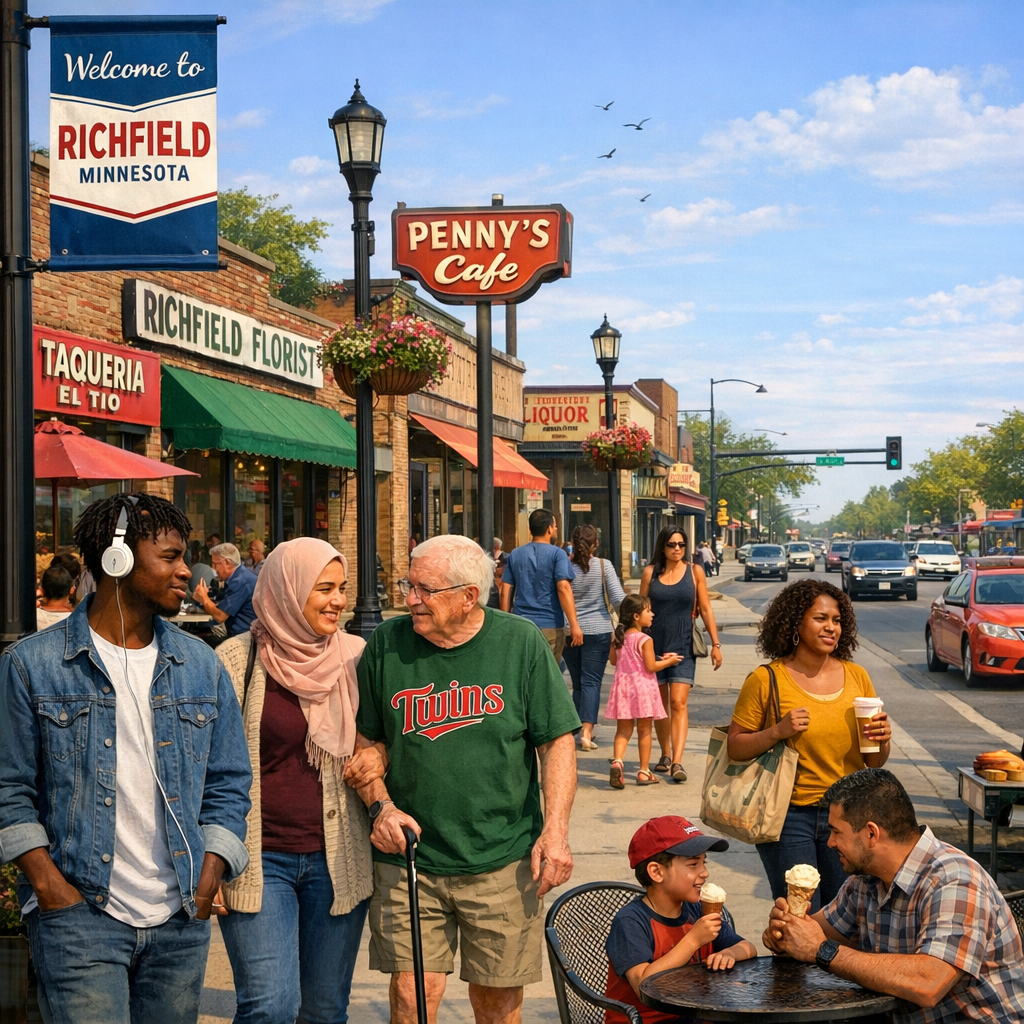
Richfield, Minnesota, has long been recognized for its strategic location and vibrant community spirit. As the city continues to evolve, understanding its economic landscape becomes essential for residents and businesses alike.
Housing Market Dynamics
The housing market in Richfield reflects a blend of stability and change. As of April 2026, the median listing price for homes stood at $329,450, marking a 5.19% decrease from the previous year. Despite this dip, the median sold price remained robust at $365,000, indicating sustained demand. Homes typically spend a median of 26 days on the market, suggesting a relatively brisk turnover. On the rental front, the median rent is $2,779 per month, with a modest year-over-year increase of 1.61%.
Business Developments and Community Initiatives
Richfield’s business environment is characterized by both resilience and proactive initiatives. The city is home to approximately 20,400 employees, with significant representation in sectors such as Health Care & Social Assistance, Professional, Scientific, & Technical Services, and Retail Trade. Notably, the highest-paying industries include Utilities and Finance & Insurance.
In response to recent challenges, local leaders have been advocating for small business relief. The coalition Cities for Safe and Stable Communities has been urging state legislators to pass relief bills essential for stabilizing local economies. Richfield Mayor Mary Supple emphasized the community’s efforts, stating, “Our City and Richfield residents have been stepping up to support local businesses, but we can’t do it alone. We need help from the state level and urge legislators to pass relief funding for businesses impacted by the recent surge.”
Demographic Shifts and Economic Implications
Richfield’s demographic profile is undergoing notable changes. The city’s population is projected to reach 36,877 by 2026, reflecting a steady growth trajectory. The community is becoming increasingly diverse, with the largest racial/ethnic groups being White (60.9%), Hispanic (17.8%), and Black (10.7%). This diversity enriches the cultural fabric of the city and presents opportunities for businesses to cater to a broader range of needs and preferences.
Economically, the median household income in Richfield was $85,132 in 2024, positioning it slightly above neighboring communities. However, approximately 5.1% of families live in poverty, highlighting areas where economic development efforts can be focused to ensure inclusive growth.
Looking Ahead
As Richfield continues to navigate its economic journey, collaboration between residents, businesses, and local government will be pivotal. By leveraging its strategic location, embracing demographic diversity, and supporting local enterprises, Richfield is well-positioned to foster a thriving and inclusive economy for years to come.