

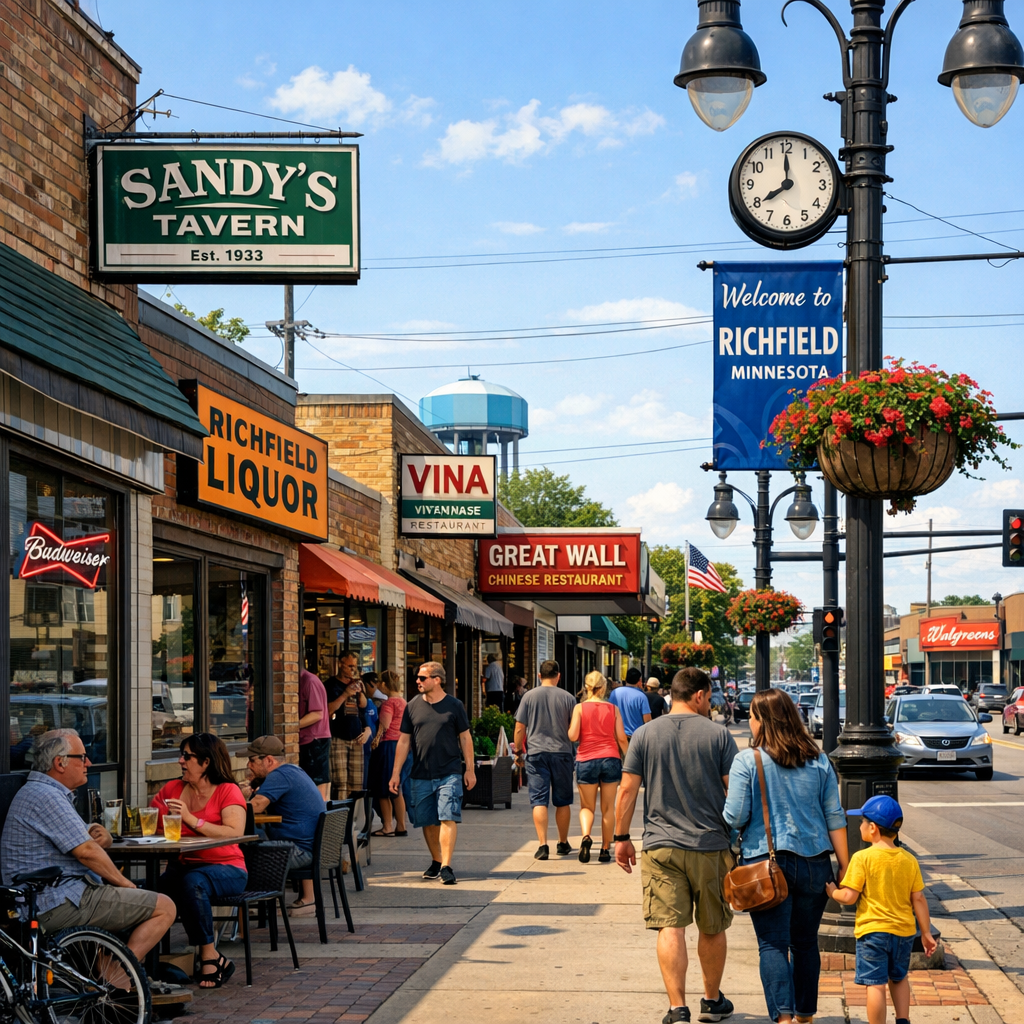
Richfield, Minnesota, often referred to as the “Urban Hometown,” seamlessly blends suburban tranquility with urban convenience. This unique positioning has cultivated a dynamic economic environment, characterized by a diverse population, a robust housing market, and a thriving local business scene.
Demographics and Workforce
As of 2026, Richfield boasts a population of approximately 36,725 residents. The city is notable for its educational attainment, with 44.3% of adults holding a bachelor’s degree or higher, placing it in the top 10% statewide. The median household income stands at $84,055, slightly below the state average, while the poverty rate is a commendably low 7.3%.
The local economy employs around 20,400 individuals, with the largest sectors being Health Care & Social Assistance, Professional, Scientific, & Technical Services, and Retail Trade. Notably, the highest-paying industries include Utilities and Finance & Insurance, offering median salaries exceeding $74,000.
Housing Market Dynamics
Richfield’s housing market reflects its desirability and strategic location. The median home value is $320,400, ranking in the top 20% statewide. The homeownership rate is 62.4%, indicating a strong preference for property ownership among residents. The market is characterized by low inventory and swift sales, with homes often selling within 21 days, half the national average.
Local Business Environment
The city’s business landscape is vibrant and diverse. The Richfield Chamber of Commerce actively promotes and represents local businesses, fostering a supportive environment for entrepreneurs. The community’s commitment to local enterprises is evident in the success of establishments like Sandy’s Tavern and the Richfield Farmers Market, which serve as gathering spots for residents.
Recent developments, such as the transformation of the former Rainbow Foods location into a Hispanic grocery store by local chain Loma Bonita, underscore the city’s responsiveness to its diverse population. With nearly 19% of residents identifying as Latino, this addition aligns with community demographics and enhances local shopping options.
Challenges and Opportunities
Despite its strengths, Richfield faces challenges, particularly in supporting small businesses affected by recent economic disruptions. The city has joined a coalition urging state legislators to pass relief bills essential for stabilizing local economies. Mayor Mary Supple emphasized the need for state-level assistance to support businesses impacted by recent events.
Looking ahead, Richfield’s strategic location, educated workforce, and engaged community position it well for continued economic growth. Ongoing redevelopment projects and a focus on supporting local businesses are expected to further enhance the city’s economic vitality.
In summary, Richfield exemplifies a community that honors its suburban roots while embracing urban opportunities. Its economic landscape is a testament to the resilience and adaptability of its residents and businesses, promising a prosperous future for this dynamic city.