

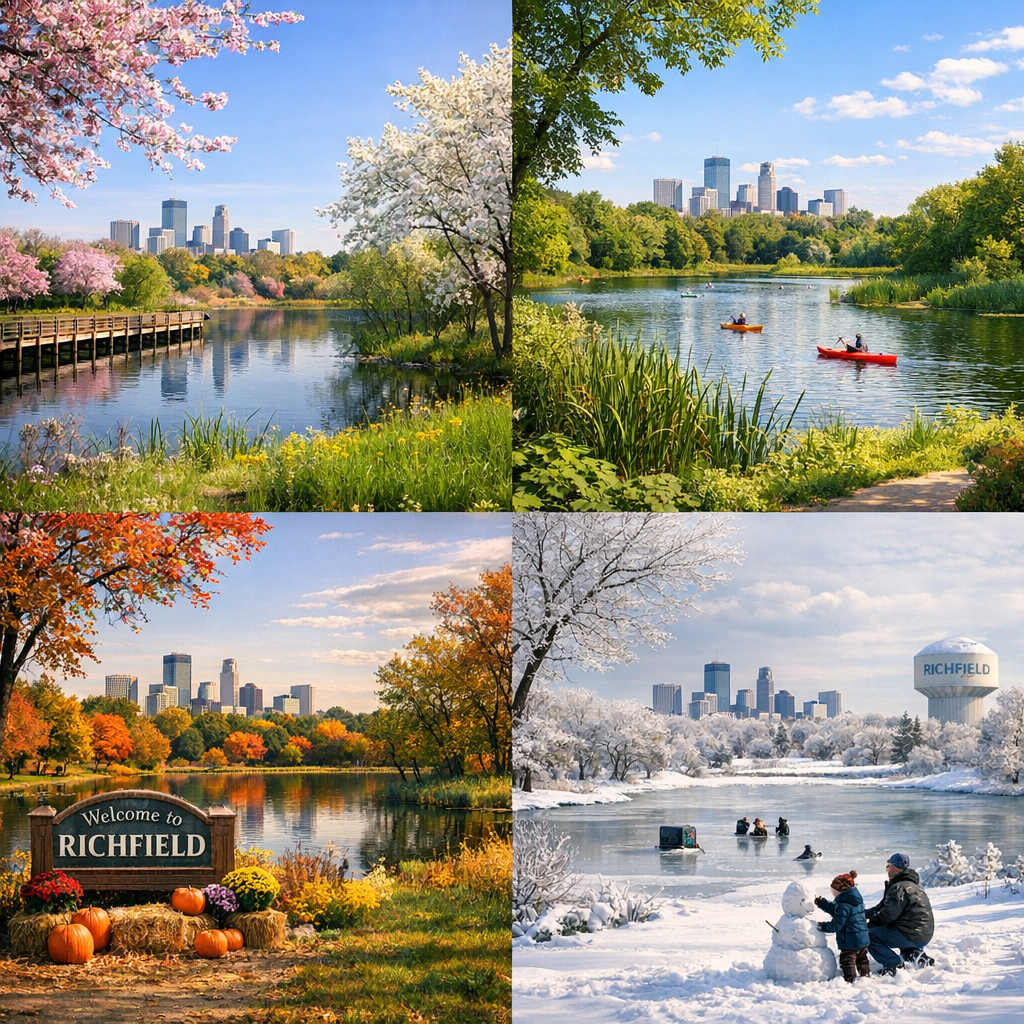
Richfield, Minnesota, experiences a humid continental climate, characterized by distinct seasonal variations. Understanding these patterns can help residents and visitors prepare for the year’s weather and appreciate the city’s environmental initiatives.
Seasonal Weather Patterns
Winter
Winters in Richfield are cold and snowy. Average low temperatures in January hover around 7.8°F (-13.4°C), with highs reaching approximately 23.3°F (-4.8°C). Snowfall is common, contributing to the city’s winter landscape.
Spring
Spring brings a gradual warming trend. By April, average highs reach 55.7°F (13.2°C), and lows are around 36.3°F (2.4°C). This season also sees increased precipitation, averaging 3.11 inches (78.99 mm) in April.
Summer
Summers are warm and humid. July, the warmest month, has average highs of 82.7°F (28.2°C) and lows of 64.2°F (17.9°C). June typically records the highest precipitation, averaging 4.85 inches (123.19 mm).
Autumn
Autumn features cooler temperatures and decreasing rainfall. October averages highs of 58.1°F (14.5°C) and lows of 39.7°F (4.3°C), with precipitation around 2.68 inches (68.07 mm).
Environmental Initiatives
Richfield is proactive in managing its water resources and promoting sustainability. The city’s Stormwater Pollution Prevention Program aims to reduce pollutants entering the stormwater system. Residents are encouraged to report any illicit discharges to help maintain water quality.
The Sustainability Commission supports education and implementation of environmentally sustainable practices. They meet monthly to discuss initiatives and policies that enhance Richfield’s environmental health.
Understanding Richfield’s climate and participating in local environmental efforts can help residents and visitors make informed decisions and contribute to the city’s sustainability goals.